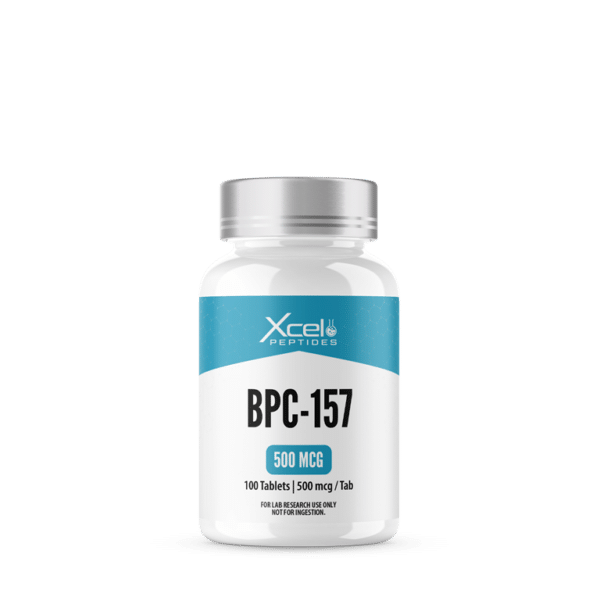
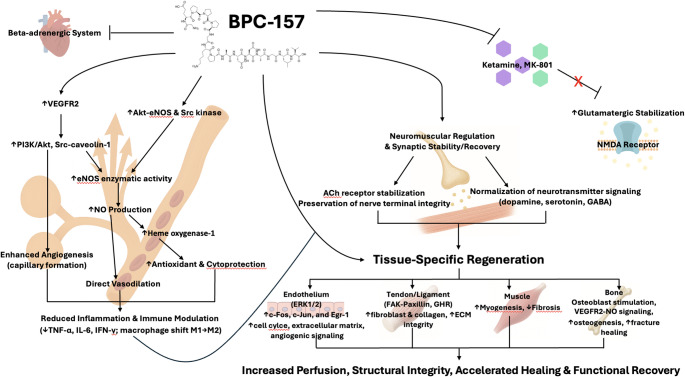
Key mechanisms include: Angiogenesis Promotion : It up-regulates vascular endothelial growth factor (VEGF), enhancing blood vessel formation to improve nutrient delivery to damaged tissues.[6] Nitric Oxide (NO) Modulation : BPC-157 interacts with the NO system to support vasodilation and anti-thrombotic effects, aiding in wound healing and reducing inflammation.[7] Growth Hormone Receptor Enhancement : It increases expression of growth hormone receptors, facilitating cell proliferation and repair in muscles, tendons, and ligaments.[8] Cytoprotection and Anti-Inflammatory Effects : By protecting cells from toxins (e.g., alcohol, NSAIDs) and modulating inflammatory pathways, it maintains tissue integrity, particularly in the GI tract and central nervous system (CNS).[9] Neuroprotective Interactions : It influences dopamine and glutamate systems, potentially mitigating brain damage from trauma or ischemia.[10] These actions make BPC-157 a versatile agent in regenerative medicine, often compared to "Wolverine-like" healing in anecdotal reports from users
BPC-157 Side Effects There is little scientific documentation of BPC-157 side effects in humans, so most potential side effects are extrapolated from preclinical studies and anecdotal reports of human use
GHK-Cus mechanism depends on cumulative tissue signaling rather than peak concentration
The primary advantage of B12 injections over supplements is the direct delivery of the nutrient to your bloodstream, as opposed to passing through your digestive tract